

Cause Marketing: What Makes People Rally Around a Cause?
Explore memorable cause marketing campaigns and the lessons nonprofits and businesses can use to build awareness, participation, and support.
Cause marketing can do something ordinary advertising often cannot: give people a reason to participate rather than simply pay attention. For nonprofits, that participation might mean donating, sharing a story, volunteering, attending an event, or inviting others to the cause. For businesses, it can mean supporting an organization or issue that genuinely fits the company and the community it serves.
What is cause marketing?
Cause marketing connects a business, nonprofit, or campaign with a social or community cause and gives people a way to participate. Effective cause marketing combines a meaningful story with a clear action, such as donating, volunteering, sharing, attending, or supporting an organization. The strongest campaigns build genuine community engagement rather than simply chasing attention.
Social media expanded the possibilities considerably. A compelling idea can move from one person to thousands—or millions—because each participant becomes part of the distribution. But the campaigns that make a lasting impression usually have more going for them than a hashtag and a donation button. They give people an emotional connection, a simple way to participate, and a story they want to pass along.
Some of the best-known campaigns also show how different that participation can look. These examples are from different time periods, but the lessons they offer remain useful for nonprofits and businesses considering cause marketing today.
Celeste Barber and the Australian Bushfire Fundraiser
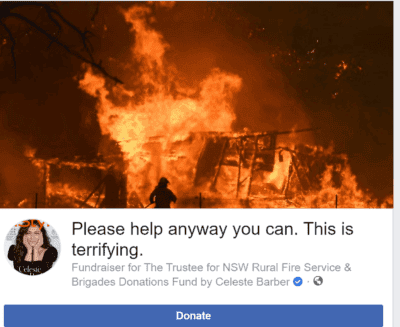
 When Australian comedian and actor Celeste Barber launched a Facebook fundraiser during the devastating 2019–2020 Australian bushfires, the response quickly grew far beyond anything she initially expected. The fundraiser ultimately brought in more than A$50 million for the NSW Rural Fire Service & Brigades Donations Fund.
The scale was extraordinary, but the mechanics were remarkably human. Barber had a personal connection to the fires; people understood immediately why help was needed, donating was simple, and her existing audience helped the appeal spread. As more people participated and shared it, the campaign gained even greater visibility.
That is an important reminder for any organization trying to build meaningful community engagement: people are much more likely to become involved when they understand the connection among the person asking, the people affected, and the action being asked of them.
The ALS Ice Bucket Challenge
The ALS Ice Bucket Challenge remains one of the clearest examples of turning participation itself into the message. During the summer of 2014, people dumped buckets of ice water over their heads, made donations, challenged friends, and shared the results on social media. According to the ALS Association, the campaign generated $115 million in donations for the organization in just a few weeks.
Part of its power came from how easy the idea was to understand and repeat. Participants did not simply receive a request for money. They became part of the campaign, created their own version of the content, and invited the next person to participate.
That is a very different dynamic from an organization repeatedly telling people, “Please donate.” The challenge gave supporters something to do, and every person who did it helped tell the story to another group.
Carson King and the University of Iowa Stead Family Children’s Hospital
In 2019, Iowa State football fan Carson King appeared on ESPN’s College GameDay holding a sign asking viewers to send money to replenish his supply of Busch Light. It was a joke, and people responded. When the money began adding up, King decided to donate it to the University of Iowa Stead Family Children’s Hospital.
What began as a homemade sign ultimately became a fundraising effort that generated roughly $3 million for the hospital through donations and matching contributions.
There was no elaborate nonprofit campaign plan behind the original sign. That is precisely what makes the example interesting. A spontaneous moment captured people’s attention, and then a meaningful cause gave that attention somewhere worthwhile to go.
You cannot manufacture every viral moment, and trying too hard to do so usually shows. What organizations can do is make it easy for people to understand the cause and participate when genuine enthusiasm begins to build.
The Notre-Dame Cathedral Fire
When fire devastated Notre-Dame Cathedral in Paris on April 15, 2019, images of the cathedral burning traveled around the world almost immediately. Individuals, families, corporations, and institutions pledged hundreds of millions of euros toward its restoration.
Notre-Dame is also a useful example of why cause marketing is not always about creating awareness from scratch. Sometimes awareness already exists. The challenge is giving people a meaningful and trustworthy way to respond to something they already care deeply about.
The cathedral reopened in December 2024 after an extensive restoration effort. The fundraising response to the fire demonstrated the extraordinary support that can emerge when history, identity, emotion, and a clear need intersect.
WWF’s #LastSelfie Campaign
The World Wildlife Fund’s #LastSelfie campaign approached cause awareness differently. The organization used Snapchat’s disappearing-image format to show endangered animals with the idea that, just like the image, the animals themselves could disappear.
It worked because the creative idea and the platform were a good fit. The disappearing content was not simply where WWF happened to place its message; it helped communicate the message itself.
That lesson is worth remembering long after any particular social platform or feature changes. Choosing a marketing channel should not begin with, “Everyone is using this, so we should too.” Start with the audience, the idea, and what you want people to understand or do. Then choose the channel that helps accomplish it. That same principle applies whether you are developing a fundraising campaign, planning an event, using social media, or considering opportunities such as Google Ad Grants for a nonprofit.
What These Cause Marketing Campaigns Have in Common
These examples are very different. One grew from a celebrity’s personal appeal. Another asked people to dump ice water on their heads. One began with a funny sign at a football game. Another responded to the destruction of one of the world’s best-known landmarks. WWF built its idea around the mechanics of a social platform.
What connects them is not virality. It is participation.
People understood why the cause mattered. They had a clear way to become involved. There was a story worth sharing, and sharing it helped other people understand the cause, too.
That is a much better place to begin than asking, “How do we make this go viral?” Virality is an outcome you cannot promise. Connection, clarity, and participation are things you can actually design for.
For nonprofits especially, that means thinking about cause marketing as part of a broader relationship with the community rather than a one-time fundraising stunt. Social media, events, partnerships, search, email, volunteers, donors, businesses, and community advocates can all play different roles in advancing an organization’s mission. We have been working with nonprofits and community organizations for years, including helping Oregon nonprofit leaders think strategically about how social media supports their mission.
If your organization has a cause worth talking about but needs help finding the right way to tell the story, start a conversation with Paradux Media Group. The goal does not have to be creating the next Ice Bucket Challenge. It needs to give the right people a meaningful reason to care and a clear way to participate.
Frequently Asked Questions
What makes a cause marketing campaign successful?
Strong cause marketing makes it easy to understand why the cause matters and what someone can do to help. Emotional connection, a simple action, credible organizations, good storytelling, and easy sharing can all contribute.
Does cause marketing have to go viral to work?
No. Virality can create enormous reach, but it is not a useful requirement for success. A smaller campaign that reaches the right community and generates meaningful donations, volunteers, participation, or awareness may be far more valuable.
Can small nonprofits use cause marketing?
Yes. Local organizations can have an advantage because people may already understand the need and feel personally connected to the community. The campaign idea should fit the nonprofit’s mission, audience, resources, and realistic capacity to manage participation.
What role does social media play in cause marketing?
Social media can help supporters become distributors of a cause by sharing, commenting, creating content, fundraising, or inviting others to participate. The platform should support the idea rather than becoming the strategy itself.
What can nonprofits learn from the ALS Ice Bucket Challenge?
The Ice Bucket Challenge made participation simple, visible, personal, and easy to pass to someone else. Its lasting lesson is not to copy the challenge itself, but to give supporters a meaningful role in spreading the message.
How else can nonprofits build awareness online?
Cause marketing can work alongside search, email, content, events, and paid advertising. Eligible organizations can also explore Google Ad Grants as another way to connect people with their mission.

We are Paradux Media Group, and we are not your regular ad agency. We are a unique combination of strategists, planners, designers, and writers. We are the people you call to launch a brand. To create a promotion. Or to put you on the first page of Google.
Specializing in advertising, branding, website design, and social media management, Paradux Media Group gives you the integrated resources you need in today’s changing business environment.
Related Articles
What Clients Say
Mike is a wizard! We had Paradux create a video for our company. It got more than 65,000 views on YouTube in the first week….

“Tisha and Garrett have been wonderful to work with. They are very knowledgeable about websites, marketing, SEO. They have both been prompt and efficient in…

We love working with Paradux. They are very professional, always responsive, learn very quickly about a wide variety of businesses and industries, and produce first-class…

“Paradux is top notch – they know their stuff and always take excellent care of me. I get so many compliments on my website! I’ve…

We love working with Tisha and Paradux. They are professional, very responsive, and are able to dive in and learn about a wide variety of…

I loved working with Paradux on updating our website to look more modern! They are very responsive and incredibly fast at getting things done. I’m…

“Paradux worked quickly and efficiently to quickly get an ad campaign together for our biggest annual fundraising event. I will be using them every year…

“I loved working with Paradux on updating our website to look more modern! They are very responsive and incredibly fast at getting things done. I’m…

“The team at Paradux was wonderful to work with. Their expertise, assistance, grace, and personality were such a joy in our partnership on a video…
