
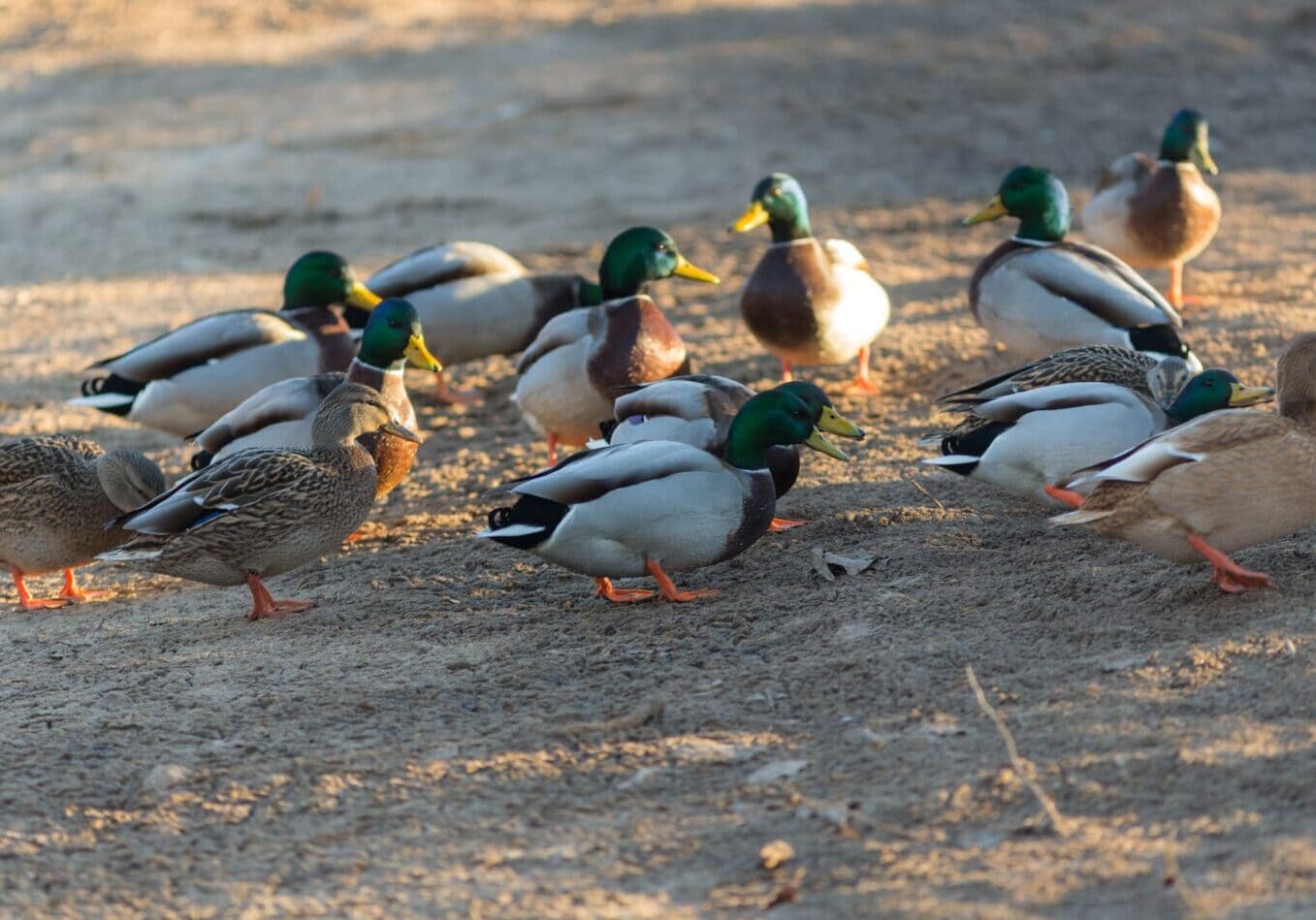

No, not all ducks live in flocks. While many species of ducks do form flocks, there are some that are more solitary in nature. The social behavior of ducks can vary depending on the species and other factors such as habitat, breeding season, and availability of resources. Some duck species, such as the Mallard, form flocks during migration or when wintering in certain areas. These flocks can consist of hundreds or even thousands of individuals. Flocking provides benefits such as increased protection against predators, better foraging opportunities, and social interaction. On the other hand, there are duck species that are more solitary and prefer to live and forage alone or in small family groups. For example, the Wood Duck is known to be more solitary, and pairs or small groups may be seen outside of the breeding season. Similarly, the Mandarin Duck is another species that tends to be more solitary. It’s important to note that even among species that generally live in flocks, there can be individual ducks that exhibit more solitary behavior. Ducks, like many other animals, can display a range of social preferences and behaviors. And no matter what the demographics of your flock (a.k.a. customer base) are, Paradux Media has the skills and experience to promote your business well.
