
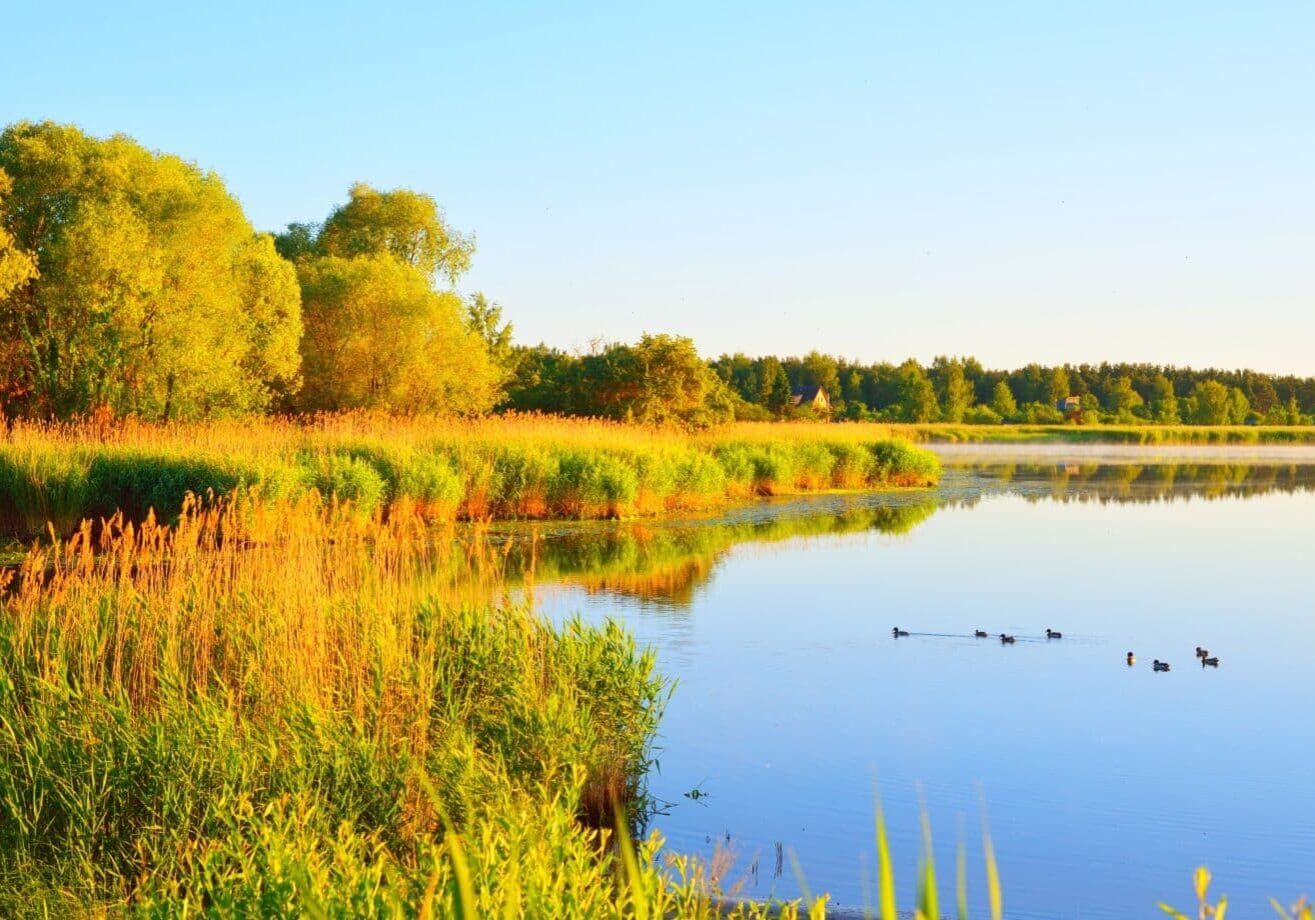

Ponds and lakes are both inland bodies of freshwater that contain living creatures. At first glance, they seem very similar! However, there are some key differences between the two. Many environmental experts say there is no technical difference between lakes and ponds. However, a general rule of thumb is that if a body of water is large and deep, it’s a lake, and if it’s short and shallow, it’s a pond. But how deep is deep? And how small is small? Here are some steps to help you tell the difference between a lake and a pond:
- Depth: A lake is generally deeper than a pond. Ponds are usually less than twenty feet deep, while lakes can be 4,000 feet deep or more. The depth of a body of water is determined by the presence of an “aphotic zone,” an area deep enough that sunlight cannot reach the bottom. Lakes have an aphotic zone, while ponds do not.
- Surface area: Lakes have a larger surface area than ponds. To determine the difference between a lake and a pond, both the depth and surface area must be considered. All the water in a pond is in the photic zone, meaning ponds are shallow enough to allow sunlight to reach the bottom. This causes plants to grow at the bottom of ponds as well as on their surface. However, sunlight can’t reach the bottom of all areas of lakes. Lakes have aphotic zones, which are deep areas of water that receive no sunlight, preventing plants from growing.
- Size: Ponds are generally smaller than lakes, but there is no universal standard for size. Some bodies of water that are called ponds may be considered lakes by some, and vice versa.
At Paradux Media, we refer to our business and client base as “the pond.” Just as a pond is a unique ecosystem, Paradux Media recognizes that each client is unique and requires a customized approach to marketing. By taking a personalized approach, Paradux Media ensures each of our clients receives the attention and care they need to thrive in today’s competitive market. We are so happy you’re a part of our pond!
