

How Observant Are You? What Great Logos Reveal on a Second Look
Take a second look at some great logos and discover the hidden symbols, negative space, and brand meaning that make thoughtful logo design memorable.

A friend of mine once sent me an email titled “How Observant Are You?” filled with logos I had seen hundreds of times—but, apparently, had never really looked at. Thanks, David.
What makes a great logo?
A great logo is recognizable, appropriate for the business, usable in many formats, and connected to the larger brand. Some memorable logos also contain secondary meanings, negative-space images, historical references, or visual ideas that reward a closer look. Those details work best when they naturally reinforce the brand rather than being added simply to make the logo clever.
I loved it then, and I still love the idea now, because these logos illustrate something important about good brand design: sometimes there is more going on than you notice at first glance.
That doesn’t mean every logo needs a hidden arrow, animal, number, or secret message. In fact, trying too hard to make a logo clever can create something that is complicated instead of meaningful. But when an additional layer of meaning fits the company naturally, it can make a logo remarkably memorable.
And that’s the difference between simply having a graphic next to your company name and having a logo that actually contributes to the brand.
A Good Logo Has a Job to Do
 I’ve seen plenty of logos that were created because a business needed “a logo.” Someone chose a font, added an icon, picked a couple of colors, and called it finished. Sometimes that icon is little more than glorified clip art that could just as easily belong to five other businesses in the same industry.
The company may eventually do the deeper work of defining its brand narrative, understanding what it stands for, and becoming much clearer about the story it wants to tell—but the logo never catches up.
A strong logo doesn’t need to explain the entire business. It couldn’t possibly. But it should belong to the brand. The shape, typography, color, proportions, symbolism, and personality should feel intentional rather than accidental.
Sometimes the most interesting logos manage to communicate something extra without making a big production out of it.
You see the logo once and it works.
Then someone points out the hidden idea and suddenly you see it differently forever.
Those are fun.
FedEx: The Arrow You Can’t Unsee
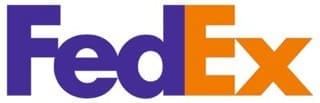
Do you see the arrow between the “E” and “x”?
This may be one of the best-known examples of negative space in logo design. Look between the capital “E” and the lowercase “x” and you’ll see the white arrow pointing forward.
What makes it work isn’t simply that there’s a hidden arrow. The arrow makes sense for FedEx. Movement. Direction. Getting something from here to there.
If the hidden shape had been a sailboat, it might still have been clever—but it wouldn’t have said anything meaningful about the company.
That relevance is what makes the idea more than a visual trick.
Tostitos: The Party Is Right in the Name
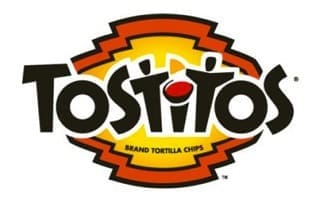
The middle letters become two people sharing a tortilla chip over a bowl of salsa.
Once you see the two people and the bowl of salsa tucked into the middle of Tostitos, it seems incredibly obvious.
And that’s precisely why it’s so good.
Tostitos isn’t simply selling a triangular piece of corn. The brand has always lived comfortably around sharing, parties, gatherings, food on the table, and people being together. The little scene hidden inside the word reinforces that idea without needing to explain it.
Tour de France: Typography in Motion

Look closely and the lettering and yellow circle form the impression of a cyclist and bicycle.
This one is a wonderful example of making the subject part of the typography itself.
You don’t need a separate bicycle illustration sitting beside the name. The visual idea is woven into the logo, which makes it feel more integrated and much more interesting.
That’s a useful reminder when designing any identity: the symbol and the name don’t always have to behave like two separate pieces.
Amazon: From A to Z

The arrow runs from “A” to “Z”—and also reads as a smile.
Amazon’s arrow is another example where the idea works on more than one level. It connects A to Z, reinforcing the idea of broad selection, while the curve also creates the suggestion of a smile.
Two ideas. One simple element.
That economy is something I particularly appreciate in good logo design. You shouldn’t need seven symbols to communicate seven different things. When one thoughtful element can carry several related ideas, the identity becomes stronger rather than busier.
Hershey’s Kisses: Look Between the Letters
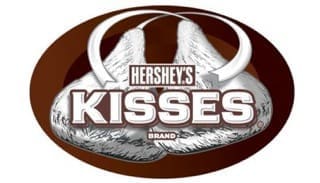
Look at the negative space between the “K” and “I” and you’ll find a sideways Kiss.
Negative space is one of those things we rarely think about unless we’re designing something. We naturally pay attention to the letters and shapes that are printed. Designers also pay attention to the shapes created by what isn’t printed.
That little Kiss hiding between the letters is a perfect example.
Toblerone: A Piece of the Brand’s History
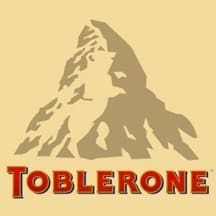
There’s a bear hidden in the mountain—a reference associated with Bern, Switzerland, where Toblerone originated.
This is where hidden logo symbolism becomes particularly interesting to me because the extra layer isn’t simply clever. It ties the identity back to the brand’s history and place.
That’s what good symbolism can do. It gives people another doorway into the story.
We talk about this same idea when developing a brand story. The strongest brands usually have real material to work with: history, geography, people, beliefs, traditions, customers, or a reason the company exists in the first place.
You don’t need to invent meaning when there’s already meaning available.
Baskin-Robbins: 31 Hiding in Plain Sight
See the “31” embedded in the “BR”?
This one connects directly to a long-standing piece of Baskin-Robbins brand history: 31 flavors.
Again, the point isn’t that everyone looking at the logo must immediately spot the number. The logo works whether they do or not.
But when they discover it, the design becomes a little more memorable—and it reinforces something already associated with the brand.
Northwest Airlines: A Classic Identity Lesson
In this classic Northwest Airlines identity, the symbol suggests a compass pointing northwest while incorporating the letterforms.
Northwest Airlines is no longer operating as an independent airline, but the logo remains a worthwhile design example.
It combines name, direction, typography, and symbol in an extremely compact mark.
And that brings up another important point: good brand design can outlive the company, product, or particular era in which it was created. We still study identities like this because the thinking remains useful even when the organization itself has changed.
Pittsburgh Zoo: What Do You See First?
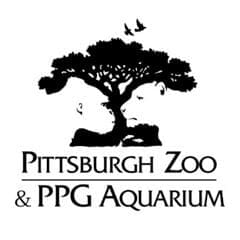
Look at the white space and you’ll see animal profiles facing each other.
This is another terrific use of negative space because your eye can move back and forth between the primary image and the animals hidden inside it.
It creates that wonderful little moment where your brain says, “Oh! I see it now.”
Those moments create memorability.
Goodwill: A Face and a Letter
The smiling face is also a lowercase “g.”
Goodwill’s mark does a lot with very little. It is friendly, human, and recognizable while also connecting directly to the organization’s name.
Simple does not mean thoughtless.
In fact, creating something simple that carries meaning is often considerably harder than making something complicated.
Milwaukee Brewers: A Baseball Glove Made of Letters
The baseball glove is formed from an “M” and a “B.”
This one may be my favorite kind of logo trick because you don’t need to discover the letters for the logo to work.
You see a baseball glove. Perfectly appropriate.
Then you notice that the glove is actually constructed from the initials of the Milwaukee Brewers.
Now it becomes even better.
The Hidden Message Isn’t What Makes a Logo Good
After looking at all of these, it would be very easy to walk away thinking, “Our logo needs something hidden in it.”
No.
Please don’t start hiding random objects in your logo.
The hidden detail is successful in these examples because it grows naturally from the brand. FedEx’s arrow makes sense. Amazon’s A-to-Z connection makes sense. The Brewers’ baseball glove makes sense. Toblerone’s historical reference adds meaning to the identity.
A clever device that has nothing to do with your business is still just a clever device.
Your logo’s first responsibility is to represent your brand clearly and consistently. It needs to work at different sizes. It needs to reproduce well. It needs to be recognizable. It needs to feel appropriate for the business it represents.
If it can also reward someone who looks a little closer, wonderful.
But cleverness comes after clarity.
Your Logo Is Only One Piece of Your Brand
I also want to make an important distinction here because the words “logo” and “brand” get used interchangeably far too often.
Your logo is not your brand.
It is one of the visual tools you use to represent your brand.
Your brand includes the expectations people have of you, the experience they have with your company, the story you tell, the language you use, your visual identity, your reputation, and the way all of those things work together over time.
That’s why successful brand management requires much more than protecting the artwork in a logo file. You’re protecting the meaning people attach to the business.
A beautiful logo cannot rescue an inconsistent brand.
But a thoughtful logo can become a remarkably powerful shorthand for a brand that has been built well.
The Best Logos Usually Have a Reason Behind Them
When we develop a brand identity, I’m much more interested in the “why” behind a design decision than whether someone thinks the logo is pretty.
Why that shape?
Why that typeface?
Why those colors?
What does this communicate about the organization?
What story does it support?
How will it behave when it leaves the designer’s screen and begins appearing on signs, websites, shirts, ads, vehicles, packaging, social media, and everything else the business touches?
Those questions are what turn logo design into brand work.
And sometimes, when all of that thinking comes together particularly well, you get one more little gift: a logo you can look at for years before suddenly realizing there was something hiding there all along.
And if you enjoyed these, don’t stop here. There are more classic examples in How Observant Are You When You Look at a Logo? Part 2.
Frequently Asked Questions
Does a logo need to have a hidden meaning?
No. A logo does not need a hidden image or message to be effective. Clarity, recognition, usability, and connection to the brand are more important. Hidden symbolism can add depth when it has a meaningful relationship to the business.
What is negative space in logo design?
Negative space is the area around and between the visible shapes in a design. Designers can use that empty space intentionally to form secondary images or ideas, such as the arrow between the “E” and “x” in the FedEx logo.
Is a logo the same thing as a brand?
No. A logo is one visual element of a brand. The brand also includes the company’s reputation, customer experience, messaging, story, personality, values, and the expectations people develop through repeated interactions with the business.
Why do hidden messages make some logos memorable?
A hidden detail can create a moment of discovery. Once someone recognizes the secondary image or meaning, they tend to remember it. The strongest examples also reinforce something relevant about the company, product, history, or brand promise.
What should a business consider when designing a logo?
Consider whether the logo reflects the organization, remains recognizable at different sizes, reproduces well across different applications, fits the larger visual identity, and has a clear reason behind its typography, colors, shapes, and symbols.
Tisha Oehmen is the Chief Branding Officer and co-founder of Paradux Media Group. With more than 30 years of experience in branding, marketing, and business strategy, Tisha brings a practical perspective shaped by helping businesses understand who they are, what makes them different, and how to communicate that clearly. An award-winning brand strategist and best-selling author of two books on branding, she believes the strongest brands aren’t manufactured—they’re uncovered, understood, and built to last.


What Clients Say
Mike is a wizard! We had Paradux create a video for our company. It got more than 65,000 views on YouTube in the first week….

“Tisha and Garrett have been wonderful to work with. They are very knowledgeable about websites, marketing, SEO. They have both been prompt and efficient in…

We love working with Paradux. They are very professional, always responsive, learn very quickly about a wide variety of businesses and industries, and produce first-class…
“Paradux is top notch – they know their stuff and always take excellent care of me. I get so many compliments on my website! I’ve…

We love working with Tisha and Paradux. They are professional, very responsive, and are able to dive in and learn about a wide variety of…
I loved working with Paradux on updating our website to look more modern! They are very responsive and incredibly fast at getting things done. I’m…

“Paradux worked quickly and efficiently to quickly get an ad campaign together for our biggest annual fundraising event. I will be using them every year…
“I loved working with Paradux on updating our website to look more modern! They are very responsive and incredibly fast at getting things done. I’m…

“The team at Paradux was wonderful to work with. Their expertise, assistance, grace, and personality were such a joy in our partnership on a video…
