

Your Business Has a History. Tell the Story.
Turn business milestones, old photos and community connections into meaningful stories that strengthen your local brand.

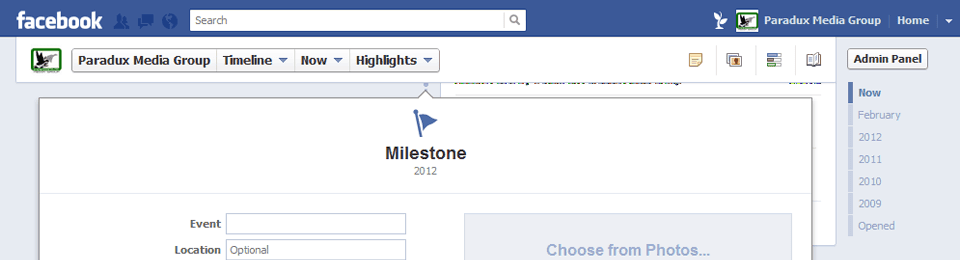
Years ago, when Facebook first rolled out Timeline for business pages, one of the new features that caught my attention was something called Milestones. Businesses could go back through their history and add important moments—when the company started, when a new location opened, when an employee joined the team, when they won an award, or when something else happened that was worth remembering.
How can a local business use its history in social media marketing?
A local business can turn anniversaries, old photographs, employee stories, community involvement, past locations, awards, sponsorships, and other milestones into content that shows people where the business came from and how it fits into the community. The history doesn't need to be dramatic to be meaningful; it needs to be genuinely yours.
At the time, I thought it was a great opportunity for local businesses. I still do. Facebook may have changed the feature, the interface, the algorithm, and probably a dozen other things since then, but the idea behind it is as useful as ever.
Your business has a history. Use it.
Local Businesses Have Stories the Big Boxes Can’t Copy
When Facebook Milestones first appeared, I remember seeing it as another place where big corporate brands would have an obvious advantage. They had marketing departments, archives full of photographs, designers, and people whose job it was to fill out the company timeline.
But the more I thought about it, the more I realized local businesses had the better story.
A national company can tell you when it opened store number 2,417. A local business can tell you about the first customer who walked through the door, the employee who’s been there for 20 years, the high school team it has sponsored since the kids’ parents were playing, or what Main Street looked like when the business first opened.
That’s something the big boxes can’t manufacture.
It’s also one of the reasons social media can be so good at humanizing a brand. People don’t have to see only the products you sell. They can see the people, history, and community behind the business.
What Counts as a Business Milestone?
 You probably have more of them than you think.
When I originally wrote about Facebook’s Milestone feature, I made a list of things a local business could use it for. Most of that list still holds up pretty well:
- When your business or organization was established
- When you opened or expanded a location
- Important employee hires and staff growth
- When new products or services were introduced
- Reaching a meaningful number of customers, orders, members, or projects
- Establishing an important vendor or community partnership
- Receiving local awards or recognition
- Joining or becoming involved with a local Chamber or nonprofit
- Community and school sponsorships
- Changes to your logo or other significant parts of your marketing
- Moments when changes in your community intersect with changes in your business
- Launching your first website or establishing an early social media presence
And that’s just a starting point.
Pull out the old photo albums. Look through the filing cabinets. Ask the person who’s been there forever. Talk to the founder. Look at old advertisements, newspaper clippings, uniforms, signs, vehicles, buildings, and product packaging.
There’s probably a lot more history sitting around than you realize.
The Community Is Part of the Story
This was the part of Facebook Milestones I thought local businesses could use to turn the tables on the big guys.
Don’t just create a timeline of things your company did. Show how the business and the community grew together.
Maybe your first location was in a building everybody in town remembers. Maybe you sponsored a Little League team 15 years ago, and some of those kids are now customers. Maybe an employee started with you in high school and now manages the place. Maybe you survived a recession, wildfire, pandemic, highway construction, or some other event your community experienced together.
Those connections matter because your customers aren’t just an audience. They’re part of the history.
That’s also where social media engagement gets interesting. An old photograph can prompt someone to say, “I remember that!” Another customer adds a story. Somebody tags an old employee. Suddenly, you’re not broadcasting to people. You’re remembering something with them.
You Don’t Need a Facebook “Milestone” Button
Obviously, the Facebook I was writing about when this article was first published isn’t the one we use today.
That’s okay.
The mistake would be assuming that because Facebook changed the feature, the marketing idea disappeared with it.
You can tell these stories in an ordinary Facebook post. You can make a series out of them. Use Instagram. Put them on LinkedIn when appropriate. Turn a significant milestone into an article on your website. Include it in an email newsletter.
If you’re looking specifically for ideas on how to turn these moments into current social content, we’ve put together a newer guide to using Facebook milestone posts to tell your business story.
The tool changed. The opportunity didn’t.
Don’t Leave Your History Entirely on Facebook
There is one piece of advice I would add today that I didn’t think about nearly enough when Facebook Timeline first arrived.
Don’t give a social network the only copy of your company’s history.
Facebook is useful, but Facebook owns Facebook. They can change the format, remove a feature, reduce your reach, rearrange your page, or decide tomorrow that everything works differently.
Your important company history should live somewhere you control, too.
Put it on your website. Build it into your About page. Write an article about a major anniversary. Save the photographs. Keep the newspaper clipping. Document the story while the people who remember it are still around to tell it.
Then social media becomes a way to share your history rather than the place responsible for preserving it.
Think Outside the Book
That was my advice when Facebook Milestones first showed up, and I think I’ll keep it.
Use a little imagination.
Don’t assume your business story is boring because you were there while it happened. The first location, the ugly old logo, the newspaper ad from 1998, the employee who’s been around forever, the customer everybody knows, the expansion that nearly didn’t happen—those are the things that make your business yours.
The big boxes can spend more money. They can hire bigger marketing departments. They can produce prettier videos.
They can’t have your history.
So tell it.
And as always, if you’re trying to figure out how to turn the stories already inside your business into marketing people actually care about, let us know. We’re here to help.
Frequently Asked Questions
What kinds of business milestones are worth sharing?
Consider when the business opened, new locations, longtime employees, new products or services, awards, customer milestones, community partnerships, sponsorships, logo changes, major projects, and important moments the business experienced alongside its community.
Does Facebook still have the old Milestone feature for business pages?
Facebook has changed significantly since the original Timeline and Milestone features were introduced. Businesses don't need a dedicated Milestone button to use the idea today. Our current guide to Facebook milestone posts explains how to turn meaningful business moments into useful social content now.
Why are business milestones useful for local marketing?
Milestones can show longevity, growth, community involvement, expertise, and the people behind a business. Local companies also have an advantage national competitors can't easily reproduce: a shared history with the customers and communities they serve.
Should business history only be posted on social media?
No. Important company history should also be preserved somewhere the business controls, such as its website. Social media is useful for sharing stories and inviting conversation, but platforms and features can change over time.
What can I do with old business photographs?
Old photographs can become anniversary posts, then-and-now comparisons, employee stories, community memories, website content, or prompts that invite customers to share what they remember. Sometimes an imperfect old photograph tells a more interesting brand story than a newly designed graphic.
Mike Frey is the Chief Visionary Officer and co-founder of Paradux Media Group. With more than 30 years in marketing, advertising, and media, Mike brings a practical perspective shaped by working with hundreds of locally owned businesses. He specializes in media strategy, buying, and storytelling that makes marketing dollars work harder. Mike learned advertising by selling it for a living, and that experience still shapes his approach: understand the business, spend where it matters, and never recommend more than a client actually needs.


What Clients Say
Mike is a wizard! We had Paradux create a video for our company. It got more than 65,000 views on YouTube in the first week….


“Tisha and Garrett have been wonderful to work with. They are very knowledgeable about websites, marketing, SEO. They have both been prompt and efficient in…

We love working with Paradux. They are very professional, always responsive, learn very quickly about a wide variety of businesses and industries, and produce first-class…

“Paradux is top notch – they know their stuff and always take excellent care of me. I get so many compliments on my website! I’ve…

We love working with Tisha and Paradux. They are professional, very responsive, and are able to dive in and learn about a wide variety of…

I loved working with Paradux on updating our website to look more modern! They are very responsive and incredibly fast at getting things done. I’m…

“Paradux worked quickly and efficiently to quickly get an ad campaign together for our biggest annual fundraising event. I will be using them every year…

“I loved working with Paradux on updating our website to look more modern! They are very responsive and incredibly fast at getting things done. I’m…

“The team at Paradux was wonderful to work with. Their expertise, assistance, grace, and personality were such a joy in our partnership on a video…
